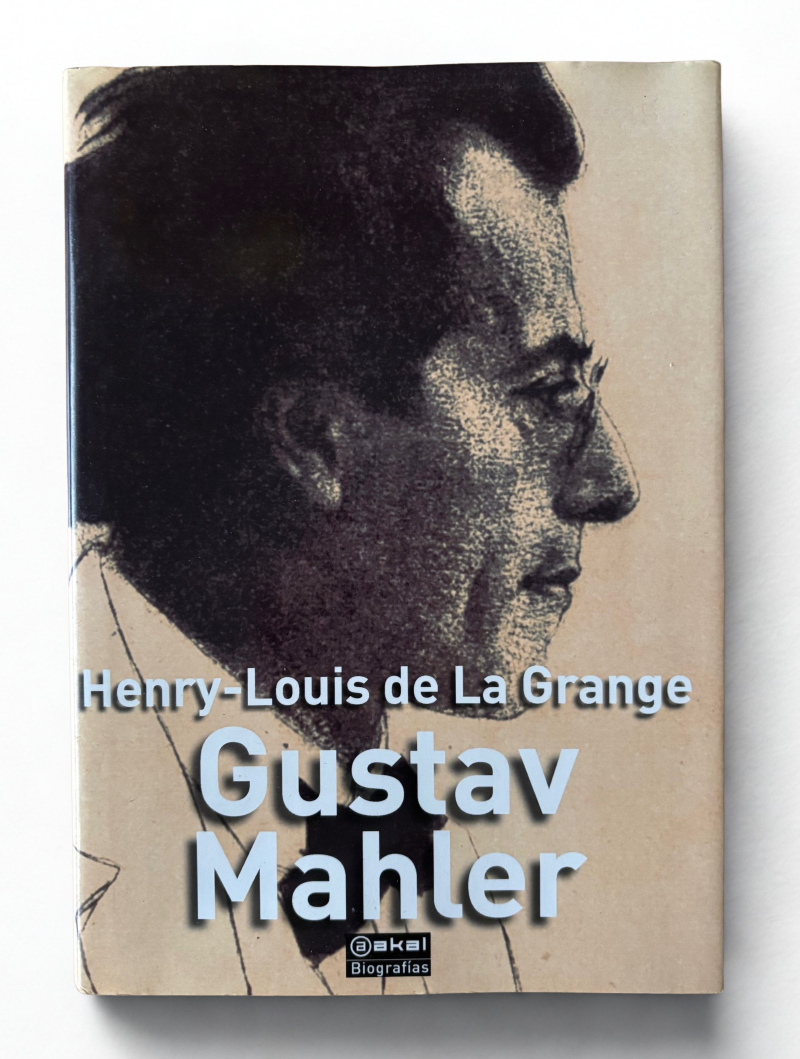
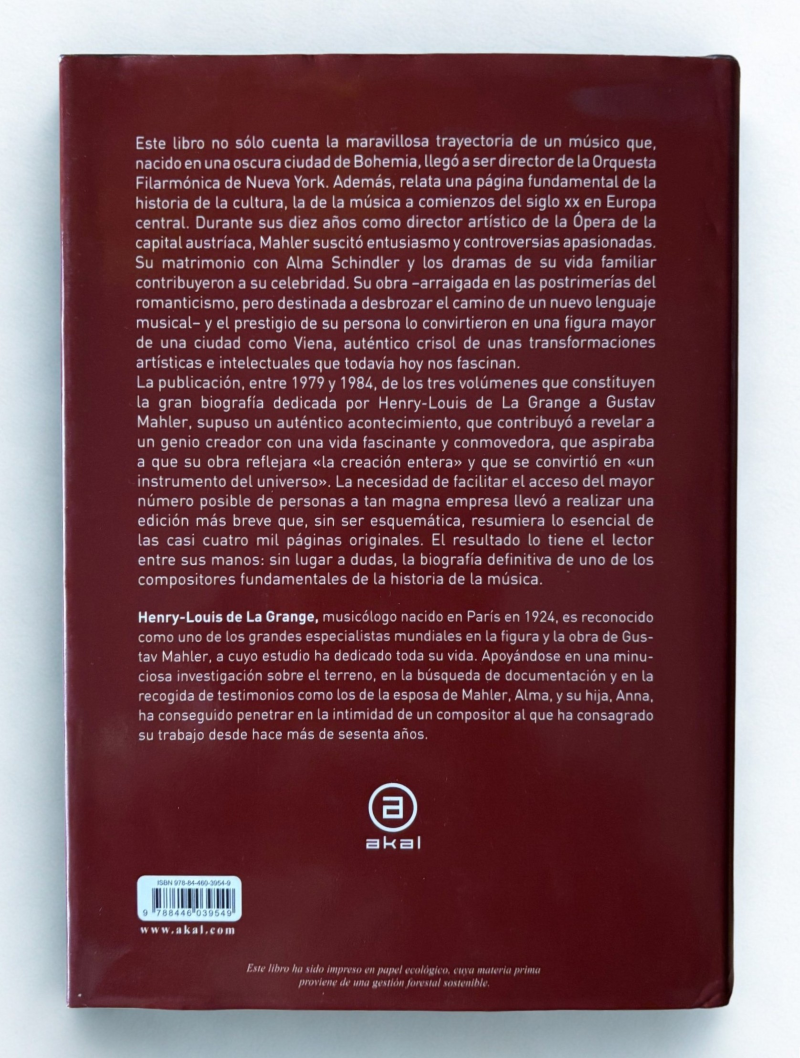
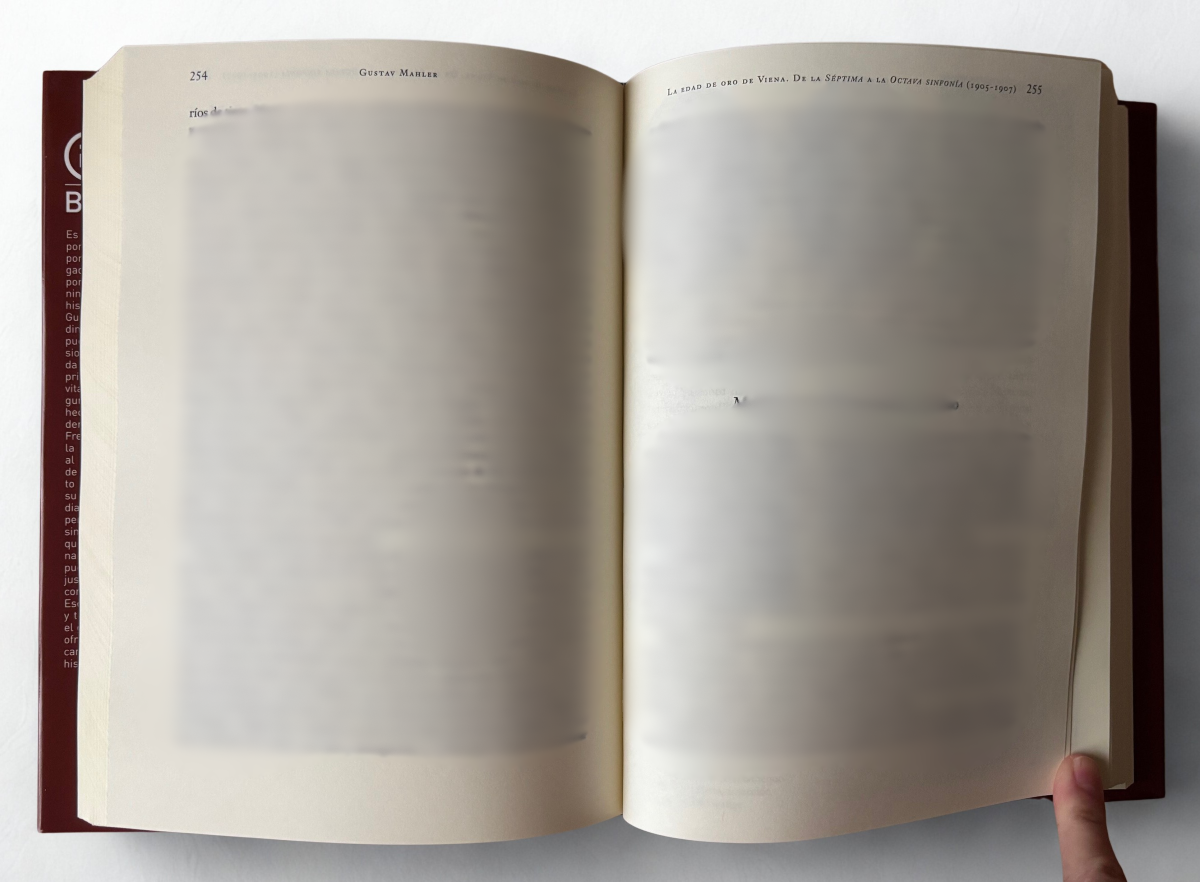
Esta obra constituye la biografía definitiva de Gustav Mahler, uno de los compositores y directores de orquesta más influyentes de la historia de la música clásica. Más que una simple biografía, el libro ofrece un retrato profundo de la vida cultural en la Viena de comienzos del siglo XX, epicentro de las transformaciones artísticas e intelectuales de Europa Central.
Desde sus orígenes en Bohemia hasta su consagración como director de la Orquesta Filarmónica de Nueva York y su decisiva etapa al frente de la Ópera de Viena, Mahler se convirtió en una figura central del romanticismo tardío y precursor de la modernidad musical. Su obra, arraigada en la tradición pero orientada hacia un nuevo lenguaje sinfónico, abrió el camino a las vanguardias del siglo XX.
La monumental investigación de Henry-Louis de La Grange —publicada originalmente en tres volúmenes entre 1979 y 1984— reveló la dimensión humana y artística de un genio cuya ambición era que su música reflejara “la creación entera”. Esta edición revisada y accesible condensa lo esencial de casi cuatro mil páginas, manteniendo el rigor histórico y la profundidad analítica que la han convertido en referencia imprescindible.
Una biografía imprescindible para amantes de la música clásica, la historia cultural europea, la Viena fin de siglo y los grandes compositores del romanticismo tardío.
This volume stands as the definitive biography of Gustav Mahler, one of the most influential composers and conductors in the history of classical music. More than a life story, it offers a sweeping portrait of early twentieth-century Central European cultural history, placing Mahler at the heart of Vienna’s extraordinary artistic and intellectual transformation.
From his humble beginnings in Bohemia to his rise as director of the Vienna Court Opera and later the New York Philharmonic, Mahler emerged as a towering figure of late Romanticism and a pioneer of modern symphonic language. His music—rooted in Romantic tradition yet boldly innovative—helped pave the way for twentieth-century musical modernism.
The monumental research of Henry-Louis de La Grange, originally published in three landmark volumes between 1979 and 1984, transformed Mahler studies and revealed the emotional depth, artistic ambition, and personal struggles of a composer who aspired to make his work embrace “the whole of creation.” This accessible edition distills the essence of nearly four thousand pages into a powerful and authoritative narrative without sacrificing scholarly rigor.
An essential biography for readers interested in Gustav Mahler, classical music history, Vienna fin de siècle, late Romantic composers, and the cultural revolution of early twentieth-century Europe.



Reviews
There are no reviews yet.