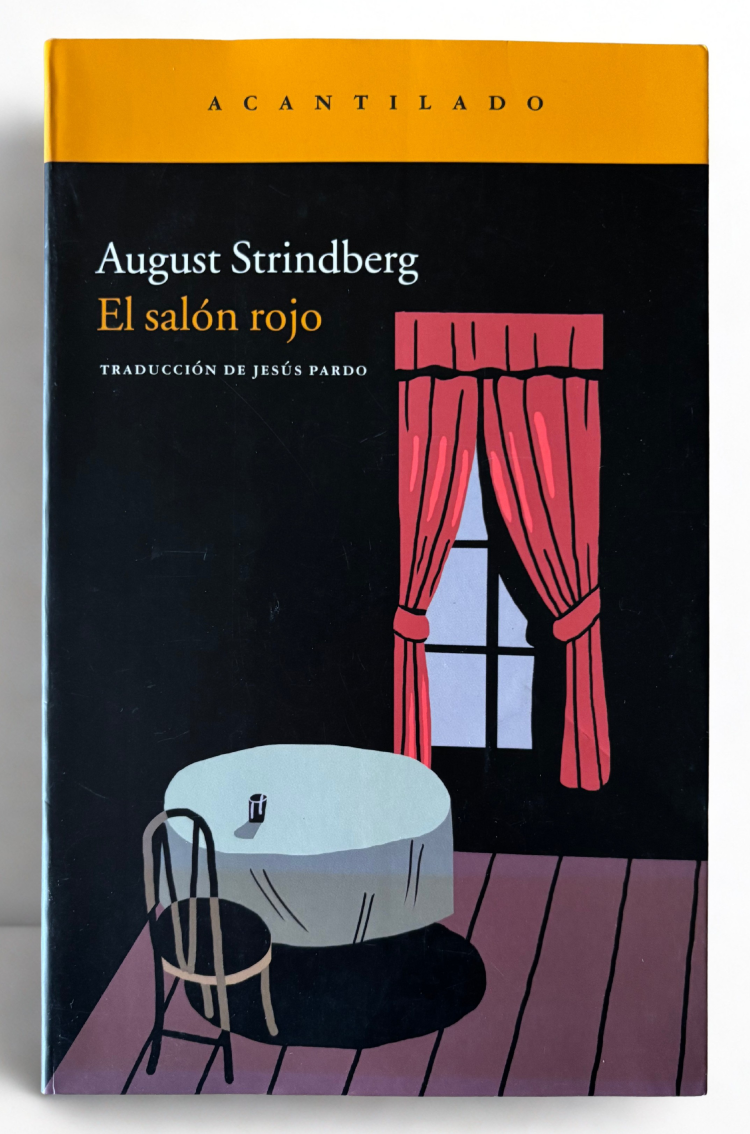
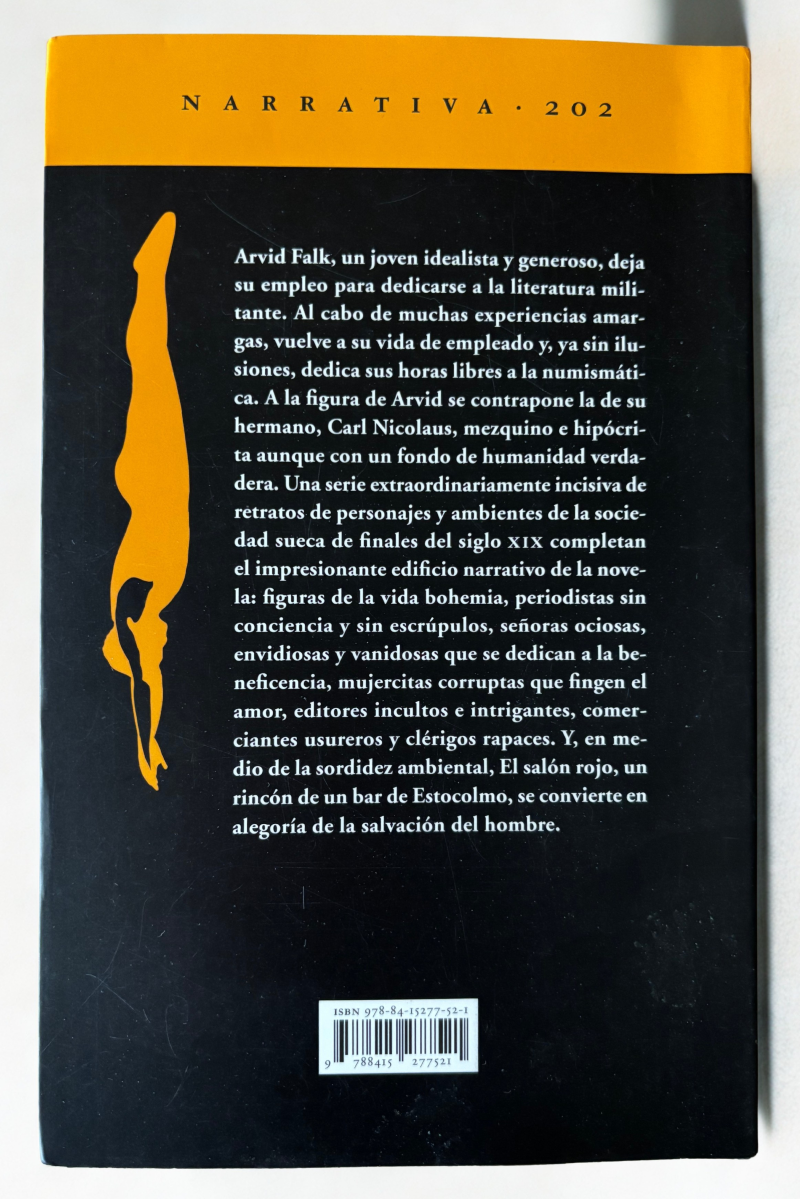
En El salón rojo, August Strindberg construye una brillante y mordaz novela de crítica social ambientada en la Suecia de finales del siglo XIX. La historia sigue a Arvid Falk, un joven idealista que abandona su empleo estable para entregarse a la literatura y al pensamiento crítico, convencido de que el arte y la verdad pueden transformar la sociedad. Sin embargo, tras enfrentarse a múltiples decepciones, corrupción y miseria moral, Arvid regresa a una existencia burocrática marcada por el desencanto y la pérdida de ideales.
Frente a él aparece la figura de su hermano Carl Nicolaus, un hombre hipócrita y oportunista que representa las contradicciones morales de una sociedad dominada por la ambición y las apariencias. A través de personajes inolvidables —periodistas sin escrúpulos, editores corruptos, burgueses vanidosos, clérigos codiciosos y figuras de la bohemia intelectual— Strindberg ofrece un retrato satírico, psicológico y profundamente moderno de la vida urbana y cultural de Estocolmo.
Con una narrativa innovadora y una mirada crítica adelantada a su tiempo, El salón rojo está considerada una obra fundamental de la literatura escandinava clásica y del realismo europeo moderno. En medio de la decadencia social, el “salón rojo”, un rincón de un café de Estocolmo, emerge como símbolo de refugio, libertad intelectual y esperanza humana.
In The Red Room, August Strindberg delivers a sharp and influential work of social satire set in late 19th-century Sweden. The novel follows Arvid Falk, a young idealist who abandons his secure government job to pursue literature and intellectual freedom, believing that art and truth can reform society. After enduring a series of bitter disappointments and moral conflicts, Arvid returns to bureaucratic life disillusioned, devoting his remaining passions to numismatics and quiet resignation.
Contrasted with Arvid is his brother Carl Nicolaus, a hypocritical and self-serving man whose hidden humanity reflects the moral contradictions of society. Through an unforgettable gallery of characters — unscrupulous journalists, corrupt publishers, vain philanthropists, greedy merchants, manipulative clergy, and members of Stockholm’s bohemian circles — Strindberg paints a vivid and biting portrait of urban, cultural, and political life in Sweden.
Widely regarded as a cornerstone of classic Scandinavian literature and modern European realism, The Red Room combines psychological insight, political criticism, and dark humor in a narrative far ahead of its time. Amid the corruption and emptiness surrounding the characters, the “Red Room,” a corner of a Stockholm café, becomes a powerful symbol of intellectual refuge, freedom, and human hope.










Reviews
There are no reviews yet.